Turning existing customers into Edge's most effective sales channel
ROLE
Senior Product Designer
Duration
1 month
Team
1 Product Manager
2 Engineers
2 Engineers
STATUS
Shipped
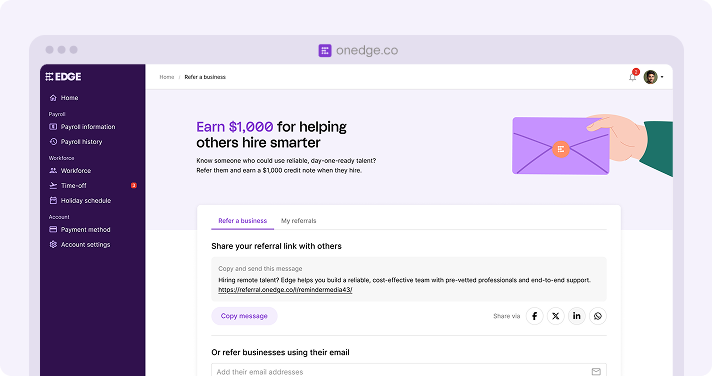
The project
Edge is a remote staffing company that connects healthcare and insurance practices in the US with trained, vetted talent from Pakistan and Peru. Think medical billers, coders, prior auth coordinators. Roles that are hard to hire locally and expensive to get wrong.
Existing customers manage everything through the Edge customer portal. Their team, payroll, time-off. It all lives there. When the business wanted to tap into customer referrals as a growth channel, that's where we built it.
This is the story of how we replaced a broken, ignored external tool with a referral feature that felt native to the portal. In three months, across an 800+ customer base, it brought in 32 new customers through referrals alone.
Existing customers manage everything through the Edge customer portal. Their team, payroll, time-off. It all lives there. When the business wanted to tap into customer referrals as a growth channel, that's where we built it.
This is the story of how we replaced a broken, ignored external tool with a referral feature that felt native to the portal. In three months, across an 800+ customer base, it brought in 32 new customers through referrals alone.
Outcome
Three months after launch, across an 800+ customer base:
104
Referrals sent in first 3 months
32
New customers acquired
30%
Referral to hire conversion
Tracked across Heap and LogRocket for product usage, and the business team's referral records for hire outcomes.
The business context
Word of mouth was an untapped growth lever, we had the signal, but not the infrastructure.
The old solution had three problems:
The old solution had three problems:
Wrong place
It lived outside the portal, so customers never stumbled on it naturally
Manual effort
The business team had to share the link individually over email and messages
No adoption
Barely anyone opened it, and it was costing money to maintain
The design problem
Conversations with customers, including members of our advisory board, showed a clear willingness to refer Edge to peers. Three things came through:
- They'd refer, but only if it was quick and stayed inside their existing workflow
- The $1,000 credit was the nudge that made it feel worth acting on
- They wanted to see what happened after referring, not send invites into a void
How do we build a referral experience so frictionless that the willingness we heard in conversations actually turns into action?
Constraints
What we designed around:
Conversations with customers, including members of our advisory board, showed a clear willingness to refer Edge to peers. Three things came through:
- Non-tech-savvy audience. Practice owners and office managers in healthcare and insurance. The experience had to be immediately intuitive.
- B2B context. Customers are putting their name behind a recommendation to a professional peer, so trust and clarity were non-negotiable.
- 1 month timeline. No room for over-engineering. Every decision had to be deliberate.
The Solution
Two connected experiences. One for the customer sending the referral, one for the business on the receiving end.
Referring a business
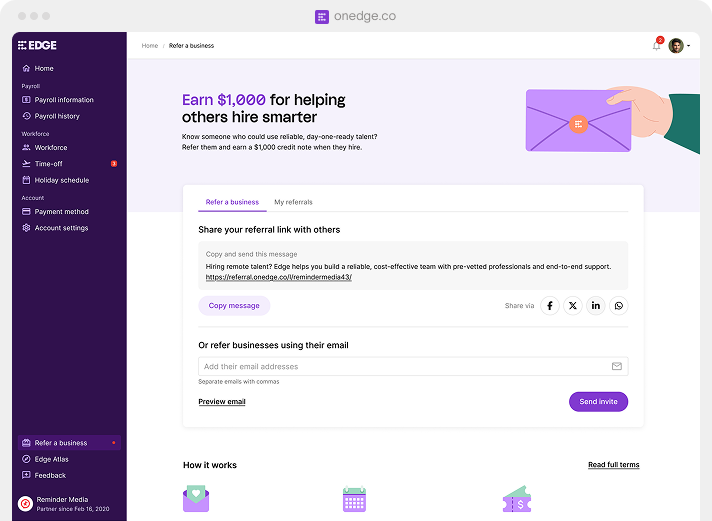
Lead with the incentive
The page opens with the reward, big and unmissable. For a busy practice owner, the $1,000 credit is the reason to act, so it does the work of pulling them in before anything else.
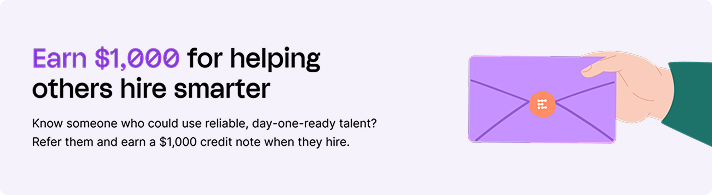
Two ways to share, for two kinds of relationships
Some owners share through personal channels like Facebook, X, LinkedIn or WhatsApp. Others prefer email. So we offered both, letting customers pick whatever matches how they already reach their network.
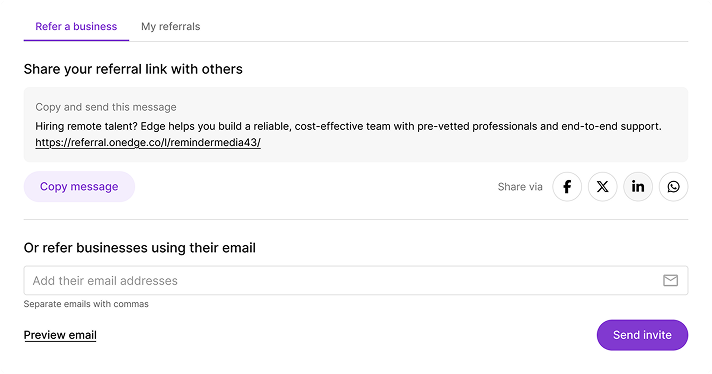
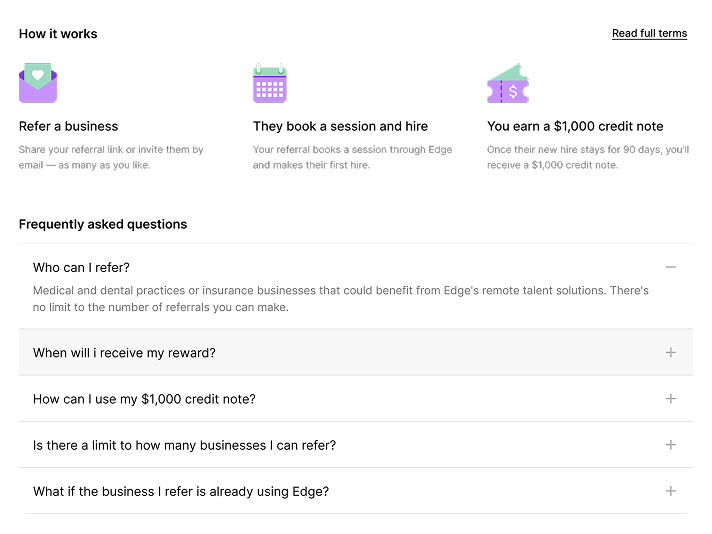
Answer the obvious questions in place
A three-step "How it works" and an FAQ sit right on the page. For a non-technical audience, this removes hesitation and the visible terms build trust in a context where customers are vouching for Edge.
Track every referral
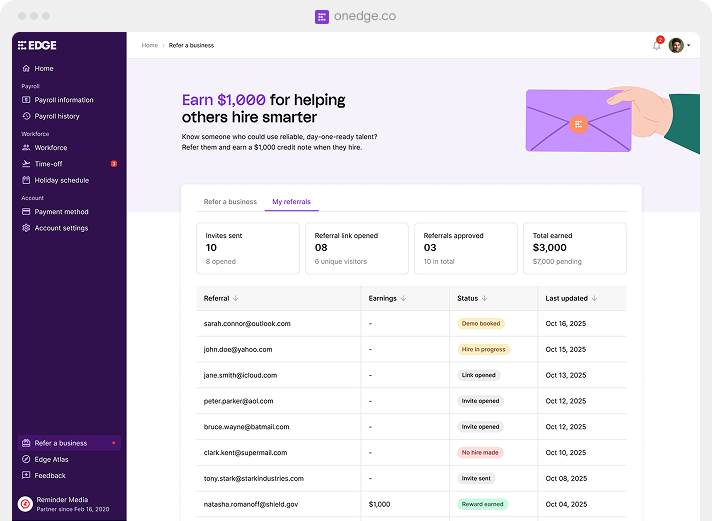
A live dashboard showing every referral and where it stands, from invite sent to reward earned. Full transparency, and watching the numbers climb gives customers a reason to keep referring.
The referee experience
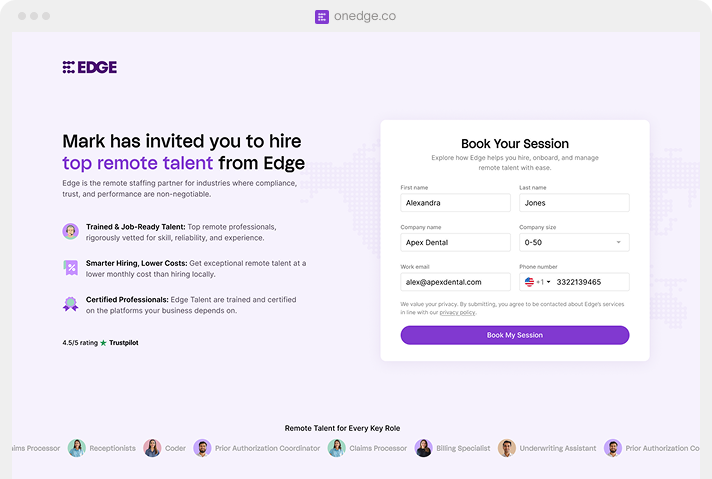
A landing page that feels personal
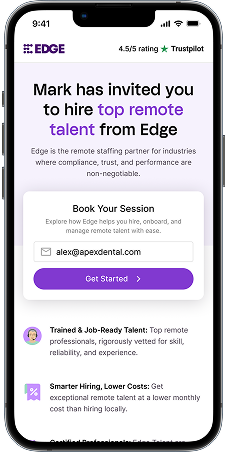
The page leads with the name of the person who referred them, so it reads as a recommendation from a trusted peer rather than an ad from a company they've never heard of. That personal vouch is what earns the click. From there, a clear value proposition and a single CTA to book a session, on both desktop and mobile.
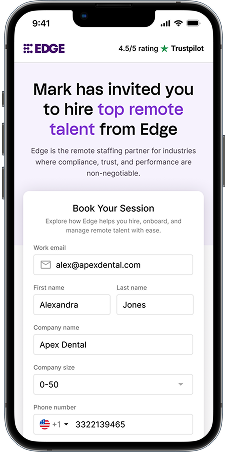
On mobile, the form is progressive
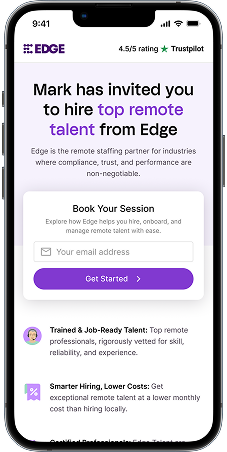
Mobile has limited real estate. We start with just an email address. Once entered, the full form follows. A small detail that removes the first moment of hesitation.
The invite email
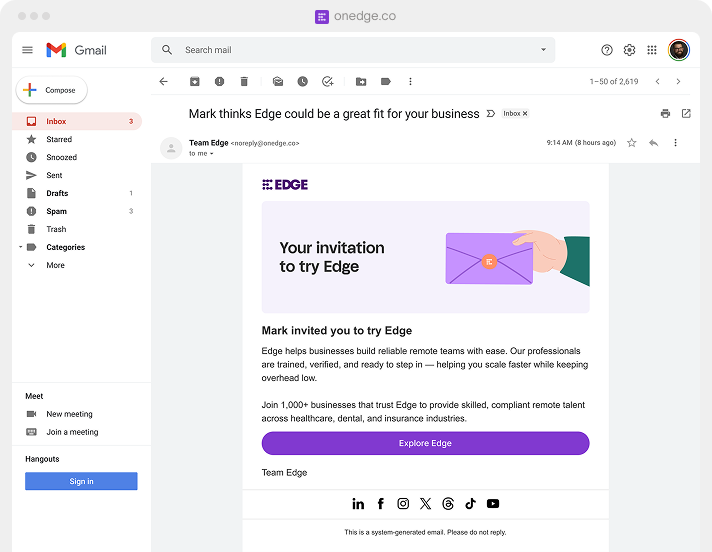
What the referee receives before they ever reach the landing page. Leading with their contact's name in the subject line is what earns the open, since it reads as a message from someone they know, not another cold pitch in the inbox.
Where it landed
In the three months following launch, the referral feature became one of Edge's most effective acquisition channels. Driven entirely by existing customers, with no additional spend on outreach or advertising.
104 referrals sent. 32 new customers. A 30% referral to hire conversion rate.
Product usage was tracked through Heap and LogRocket, with referral outcomes confirmed against the business team's records.
104 referrals sent. 32 new customers. A 30% referral to hire conversion rate.
Product usage was tracked through Heap and LogRocket, with referral outcomes confirmed against the business team's records.
Reflections
What I took away
The best place to launch a feature is where your users already are
Moving the referral tool into the portal, where customers spent time every week, was the single biggest unlock. The external tool had the same function. Nobody used it.
Validated intent is not the same as guaranteed behaviour
Customers said they'd refer. Giving them a $1,000 incentive and a frictionless experience is what turned that intent into action. Willingness needs a nudge.
Transparency is a retention mechanic
The tracking dashboard wasn't just a nice-to-have. Seeing referrals move through stages kept customers engaged with the feature long after the first invite was sent.